Saturday, 30 November 2024

Ontario cities are finally lowering development charges

If you're a longtime reader of this blog, you might remember this post from 2020, which was about a cost comparison that developer Urban Capital had done between a project they completed in 2005 and a project they were doing in 2020. What they uncovered was that the biggest culprit in terms of rising costs was none other than development charges. This line item had increased by 3,244%! Everyone in the development industry knows that this is the reality. Not only have developers needed to carr...  ‌ ‌ ‌ ‌ ‌ ‌ ‌ ‌ ‌ ‌ ‌ ‌ ‌ ‌ ‌ ‌ ‌ ‌ ‌ ‌ ‌ ‌ ‌ ‌ ‌  ‌ ‌ ‌ ‌ ‌ ‌ ‌ ‌ ‌ ‌ ‌ ‌ ‌ ‌ ‌ ‌ ‌ ‌ ‌ ‌ ‌ ‌ ‌ ‌ ‌  ‌ ‌ ‌ ‌ ‌ ‌ ‌ ‌ ‌ ‌ ‌ ‌ ‌ ‌ ‌ ‌ ‌ ‌ ‌ ‌ ‌ ‌ ‌ ‌ ‌  ‌ ‌ ‌ ‌ ‌ ‌ ‌ ‌ ‌ ‌ ‌ ‌ ‌ ‌ ‌ ‌ ‌ ‌ ‌ ‌ ‌ ‌ ‌ ‌ ‌  ‌ ‌ ‌ ‌ ‌ ‌ ‌ ‌ ‌ ‌ ‌ ‌ ‌ ‌ ‌ ‌ ‌ ‌ ‌ ‌ ‌ ‌ ‌ ‌ ‌  ‌ ‌ ‌ ‌ ‌ ‌ ‌ ‌ ‌ ‌ ‌ ‌ ‌ ‌ ‌ ‌ ‌ ‌ ‌ ‌ ‌ ‌ ‌ ‌ ‌ 

Ontario cities are finally lowering development charges

Brandon Donnelly

If you're a longtime reader of this blog, you might remember this post from 2020, which was about a cost comparison that developer Urban Capital had done between a project they completed in 2005 and a project they were doing in 2020. What they uncovered was that the biggest culprit in terms of rising costs was none other than development charges. This line item had increased by 3,244%!

Everyone in the development industry knows that this is the reality. Not only have developers needed to carry a big budget for development charges, but they've also had to carry allowances for escalations; and that's because they have tended to jump multiple times throughout the course of a single project. It's frankly hard to keep up.

So for anyone to say that development charges have generally increased at the rate of inflation -- which some do say -- I'm guessing they don't know math, they don't know how inflation works, or they're lying because taxing new homes is politically easier than the other ways of collecting municipal revenue.

Thankfully, the Bank of Canada has an easy-to-use inflation calculator. And if one were to plug in 2005 and 2020, it would tell you that over this 15-year period, the average annual rate of inflation was 1.63% and that, as a total percentage change, this equates to 27.43%. So, 3,244% vs. 27.43%. It's not even close.

For a long time, nobody cared to listen to developers complain about this. The market was, you know, too good. Isn't this just developers being greedy? Well, that is no longer the case and consumers are waking up. Here's an excerpt from a Globe and Mail article published this week:

But cities started to enjoy that revenue stream too much. They began to gorge on development fees, a flow of money that allowed politicians to keep property taxes low. Who was going to complain? Future owners of homes are often people who don't yet live in the city and can't vote. It's the city-building equivalent of that Monty Python joke about an innovation in how to raise government revenue: taxing foreigners living abroad.

But even more importantly, municipalities are now waking up. Last week, the City of Vaughan -- which previously had the dubious distinction of the highest DCs in the Greater Toronto Area -- announced that it would be reverting back to the rates they had in effect on September 18, 2018, and that these rates would remain in place until November 19, 2029.

This takes the development charge for a single-family home from $95,466 per unit back down to $50,193 per unit. This is significant! And given the current strains on housing affordability, these savings will almost certainly flow through to end purchasers. (FYI, all of the developers who have signed the CANT pledge have all agreed to pass on any tax savings dollar for dollar.)

Here's a quote from Vaughan Mayor Steven Del Duca:

Development charges have become an unfair tax burden on homebuyers. Too many of our residents, in particular young families in our community, have seen their dream of buying a home close to where they grew up, disappear completely as housing prices have spiraled out of control.  We have a housing affordability crisis and it's time for us to get real about the solutions needed to solve it. Today's decision by Vaughan Council to dramatically reduce our development charges for the foreseeable future is a strong step in the right direction. I urge other municipalities to follow our lead and do the right thing.

He makes a good point. It behooves other cities in Ontario to follow their lead.

Cover photo by Allen Y on Unsplash


Sent via Paragraph

Web3 writing & publishing

2010 El Camino Real Office 2350

Santa Clara, CA 95050

You're receiving this because you subscribed to this newsletter.

Unsubscribe or Manage Preferences

Friday, 29 November 2024

Operation NANOOK

Every year, the Canadian Armed Forces deploy soldiers to Canada's Arctic for a series of activities that are broadly called Operation NANOOK. One of the main reasons for doing this is to show that Canada is present and active in the area. And this is becoming increasingly more important to our country for at least two reasons. One, climate change is making the area more accessible and navigable. So there's growing interest in it as a global shipping route. And two, the waters, specifically th...  ‌ ‌ ‌ ‌ ‌ ‌ ‌ ‌ ‌ ‌ ‌ ‌ ‌ ‌ ‌ ‌ ‌ ‌ ‌ ‌ ‌ ‌ ‌ ‌ ‌  ‌ ‌ ‌ ‌ ‌ ‌ ‌ ‌ ‌ ‌ ‌ ‌ ‌ ‌ ‌ ‌ ‌ ‌ ‌ ‌ ‌ ‌ ‌ ‌ ‌  ‌ ‌ ‌ ‌ ‌ ‌ ‌ ‌ ‌ ‌ ‌ ‌ ‌ ‌ ‌ ‌ ‌ ‌ ‌ ‌ ‌ ‌ ‌ ‌ ‌  ‌ ‌ ‌ ‌ ‌ ‌ ‌ ‌ ‌ ‌ ‌ ‌ ‌ ‌ ‌ ‌ ‌ ‌ ‌ ‌ ‌ ‌ ‌ ‌ ‌  ‌ ‌ ‌ ‌ ‌ ‌ ‌ ‌ ‌ ‌ ‌ ‌ ‌ ‌ ‌ ‌ ‌ ‌ ‌ ‌ ‌ ‌ ‌ ‌ ‌  ‌ ‌ ‌ ‌ ‌ ‌ ‌ ‌ ‌ ‌ ‌ ‌ ‌ ‌ ‌ ‌ ‌ ‌ ‌ ‌ ‌ ‌ ‌ ‌ ‌ 

Operation NANOOK

Brandon Donnelly

Every year, the Canadian Armed Forces deploy soldiers to Canada's Arctic for a series of activities that are broadly called Operation NANOOK. One of the main reasons for doing this is to show that Canada is present and active in the area. And this is becoming increasingly more important to our country for at least two reasons.

One, climate change is making the area more accessible and navigable. So there's growing interest in it as a global shipping route. And two, the waters, specifically the Northwest Passage, are contested. Canada claims them as internal waterways, but many other countries continue to argue that the passage is an international strait.

This should not surprise anyone.

So I am of the strong opinion that this is a critically important operation for Canada. In fact, it's very possible that we're not doing nearly enough. The North can feel pretty far away from Middle Island in Lake Erie (which is the southernmost point of our country). And that's because it is. But it should never be out of mind.

If you're interested in this topic, I would encourage you to take a look at this photo essay by Gavin John, published in the Globe and Mail. Gavin takes incredible photos and you can find more of his work here and here.

Cover photo by Gavin John


Sent via Paragraph

Web3 writing & publishing

2010 El Camino Real Office 2350

Santa Clara, CA 95050

You're receiving this because you subscribed to this newsletter.

Unsubscribe or Manage Preferences

Thursday, 28 November 2024

US cities with the best and worst roads

I'm not an expert when it comes to roads and highways. I mean, usually we talk about bike lanes around here. But today I learned, via Brian Potter over at Construction Physics, that there is such a thing as an International Roughness Index (or IRI). In simple terms, it measures how much a car bounces up and down over a given distance of driving, and it is usually expressed in units like "millimeters per meter." A low IRI is good. It means less bouncing up and down. And a high IRI is bad. It m...  ‌ ‌ ‌ ‌ ‌ ‌ ‌ ‌ ‌ ‌ ‌ ‌ ‌ ‌ ‌ ‌ ‌ ‌ ‌ ‌ ‌ ‌ ‌ ‌ ‌  ‌ ‌ ‌ ‌ ‌ ‌ ‌ ‌ ‌ ‌ ‌ ‌ ‌ ‌ ‌ ‌ ‌ ‌ ‌ ‌ ‌ ‌ ‌ ‌ ‌  ‌ ‌ ‌ ‌ ‌ ‌ ‌ ‌ ‌ ‌ ‌ ‌ ‌ ‌ ‌ ‌ ‌ ‌ ‌ ‌ ‌ ‌ ‌ ‌ ‌  ‌ ‌ ‌ ‌ ‌ ‌ ‌ ‌ ‌ ‌ ‌ ‌ ‌ ‌ ‌ ‌ ‌ ‌ ‌ ‌ ‌ ‌ ‌ ‌ ‌  ‌ ‌ ‌ ‌ ‌ ‌ ‌ ‌ ‌ ‌ ‌ ‌ ‌ ‌ ‌ ‌ ‌ ‌ ‌ ‌ ‌ ‌ ‌ ‌ ‌  ‌ ‌ ‌ ‌ ‌ ‌ ‌ ‌ ‌ ‌ ‌ ‌ ‌ ‌ ‌ ‌ ‌ ‌ ‌ ‌ ‌ ‌ ‌ ‌ ‌ 

US cities with the best and worst roads

Brandon Donnelly

I'm not an expert when it comes to roads and highways. I mean, usually we talk about bike lanes around here. But today I learned, via Brian Potter over at Construction Physics, that there is such a thing as an International Roughness Index (or IRI). In simple terms, it measures how much a car bounces up and down over a given distance of driving, and it is usually expressed in units like "millimeters per meter." A low IRI is good. It means less bouncing up and down. And a high IRI is bad. It means more bouncing up and down, suggesting the road is poor. This, it turns out, is the most commonly used index in the world for evaluating whether a road sucks or not.

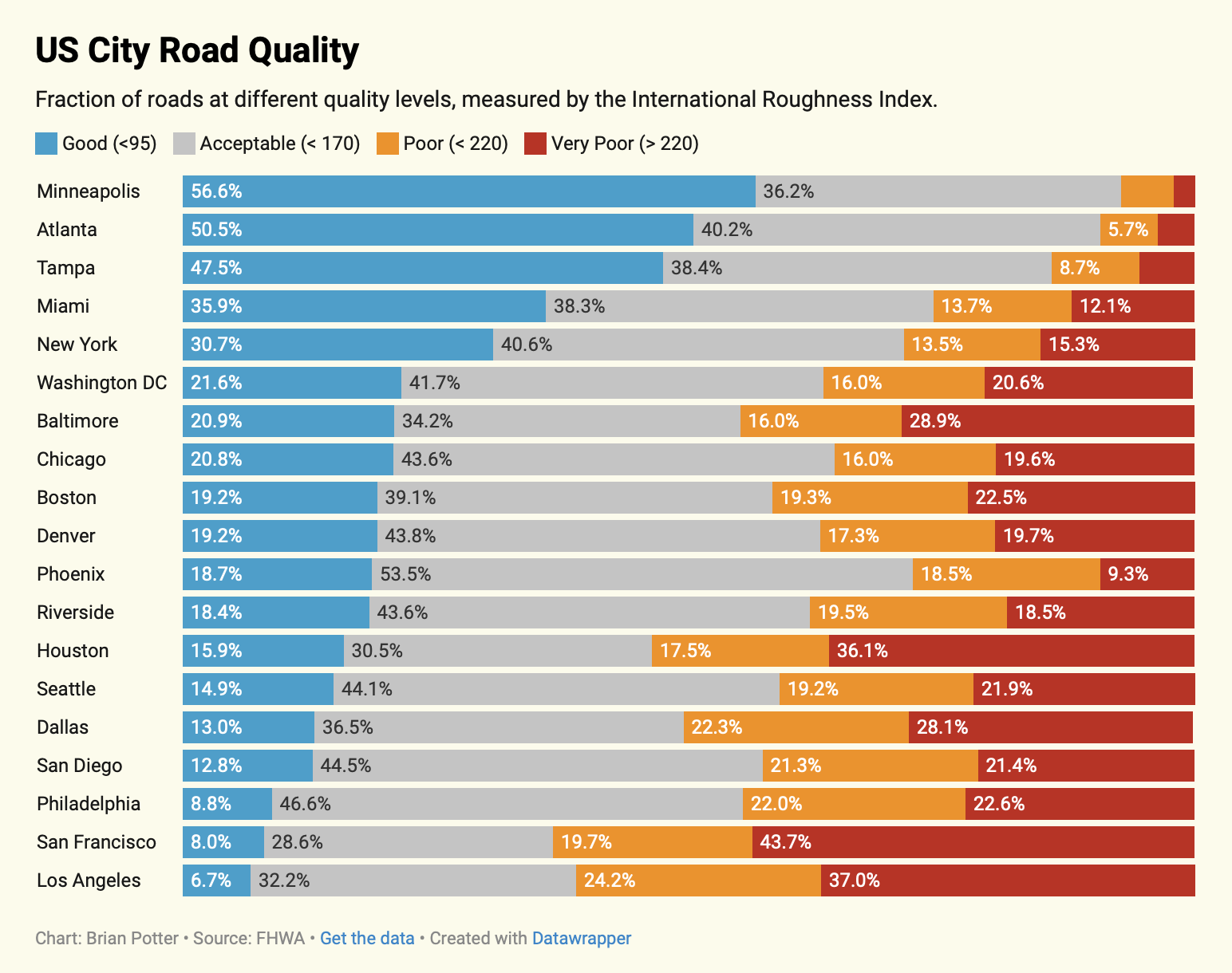
And in this recent post, Brian uses the index to chart out road quality across the US. Here's non-interstate roads for the 19 largest metro areas:

At least two things can be readily gleaned from the data in his post. Number one, US Interstates tend to be pretty good. More than 80% of the mileage is classified as "good" or "very good." Non-interstate roads are, on the other hand, much poorer. And in every single case, urban roads are worse than rural roads, presumably because of their higher traffic volumes. Number two, there doesn't seem to be much of a correlation between climate and road quality. Intuitively, one would think that freeze-thaw cycles and road salt would give cold cities the worst roads, but that is not actually the case.

Los Angeles sucks the most.

Cover photo by Thaddaeus Lim on Unsplash


Sent via Paragraph

Web3 writing & publishing

2010 El Camino Real Office 2350

Santa Clara, CA 95050

You're receiving this because you subscribed to this newsletter.

Unsubscribe or Manage Preferences

Wednesday, 27 November 2024

When will the pre-construction condo market return?

In years past, it was relatively simple for Toronto condominium developers to underwrite pre-construction sales (which, as most of you know, is a requirement for construction financing). Notwithstanding the temporary blips, like at the start of the pandemic, it was easy to feel generally confident that the sales would be there when you needed them. It was just a question of 1) pricing and 2) how quickly could you get there (i.e. get through the zoning and entitlement process). This is not the...  ‌ ‌ ‌ ‌ ‌ ‌ ‌ ‌ ‌ ‌ ‌ ‌ ‌ ‌ ‌ ‌ ‌ ‌ ‌ ‌ ‌ ‌ ‌ ‌ ‌  ‌ ‌ ‌ ‌ ‌ ‌ ‌ ‌ ‌ ‌ ‌ ‌ ‌ ‌ ‌ ‌ ‌ ‌ ‌ ‌ ‌ ‌ ‌ ‌ ‌  ‌ ‌ ‌ ‌ ‌ ‌ ‌ ‌ ‌ ‌ ‌ ‌ ‌ ‌ ‌ ‌ ‌ ‌ ‌ ‌ ‌ ‌ ‌ ‌ ‌  ‌ ‌ ‌ ‌ ‌ ‌ ‌ ‌ ‌ ‌ ‌ ‌ ‌ ‌ ‌ ‌ ‌ ‌ ‌ ‌ ‌ ‌ ‌ ‌ ‌  ‌ ‌ ‌ ‌ ‌ ‌ ‌ ‌ ‌ ‌ ‌ ‌ ‌ ‌ ‌ ‌ ‌ ‌ ‌ ‌ ‌ ‌ ‌ ‌ ‌  ‌ ‌ ‌ ‌ ‌ ‌ ‌ ‌ ‌ ‌ ‌ ‌ ‌ ‌ ‌ ‌ ‌ ‌ ‌ ‌ ‌ ‌ ‌ ‌ ‌ 

When will the pre-construction condo market return?

Brandon Donnelly

In years past, it was relatively simple for Toronto condominium developers to underwrite pre-construction sales (which, as most of you know, is a requirement for construction financing). Notwithstanding the temporary blips, like at the start of the pandemic, it was easy to feel generally confident that the sales would be there when you needed them. It was just a question of 1) pricing and 2) how quickly could you get there (i.e. get through the zoning and entitlement process).

This is not the case today. And it's happening in many (most?) markets, not just Toronto.

Today, the market clearing price for new condominiums is below the cost of actually building them. So no developer knows what the pricing should be, because no developer can price there and still have a feasible project. In addition, the question of timing is no longer dependent on approval timelines (though please don't take this to mean that approval timelines don't impact projects). At this point in the cycle, there are lots of zoned sites available. The question is now: When will the pre-construction condo market return?

It is impossible to know the answer to this. If you have a truly differentiated product catering to a specific buyer pool, then it is possible the answer could still be today. But if you look at the number of condominium suites under construction in the region (more than 85k) and the number of suites expected to finish construction this year (around 27k the last time I checked), most people are broadly assuming the answer is, at the very least, a few years from now.

Not surprisingly, this is having a meaningful impact on high-density land values. If you don't know when and for how much you can sell for at the back end, then it's pretty challenging to run a residual land value model today. Because it's a lot harder to have conviction in your assumptions. What this also means is that, if your assumption is the market will take years to return, then you need to add in this additional cost of time into your model.

To provide an indicative example, let's say that you're buying land today for $75 per buildable square foot, but that you don't anticipate being able to launch condominium sales for a few years. The result could be that once you add in interest charges and other carry on the land, your effective land basis could end up being somewhere closer to $125 pbsf. (Again, these are just indicative numbers.) The end result is that you have to pay that much less today.

In today's market, you need to have the flexibility of patience. So this is one of the ways that developers are thinking about new acquisitions, assuming they're still active. And it represents a significant discount on land (>50% in many cases) compared to where we were a few years ago.

Photo by Nadine E on Unsplash


Sent via Paragraph

Web3 writing & publishing

2010 El Camino Real Office 2350

Santa Clara, CA 95050

You're receiving this because you subscribed to this newsletter.

Unsubscribe or Manage Preferences

Tuesday, 26 November 2024

Home and meeting place for art

Home, as I've always said, is not an actual building typology. A home can be anything. For some people, a comfortable home might be a suburban single-family house in a bucolic community. And for others, a home might be two converted office spaces in Le Marais that also double as a highly coveted event space for art and design. That's the thing about homes, they're very personal. This latter scenario describes the home of Jérémy Rocher and Kym Ellery -- a space that seems to be making the roun...  ‌ ‌ ‌ ‌ ‌ ‌ ‌ ‌ ‌ ‌ ‌ ‌ ‌ ‌ ‌ ‌ ‌ ‌ ‌ ‌ ‌ ‌ ‌ ‌ ‌  ‌ ‌ ‌ ‌ ‌ ‌ ‌ ‌ ‌ ‌ ‌ ‌ ‌ ‌ ‌ ‌ ‌ ‌ ‌ ‌ ‌ ‌ ‌ ‌ ‌  ‌ ‌ ‌ ‌ ‌ ‌ ‌ ‌ ‌ ‌ ‌ ‌ ‌ ‌ ‌ ‌ ‌ ‌ ‌ ‌ ‌ ‌ ‌ ‌ ‌  ‌ ‌ ‌ ‌ ‌ ‌ ‌ ‌ ‌ ‌ ‌ ‌ ‌ ‌ ‌ ‌ ‌ ‌ ‌ ‌ ‌ ‌ ‌ ‌ ‌  ‌ ‌ ‌ ‌ ‌ ‌ ‌ ‌ ‌ ‌ ‌ ‌ ‌ ‌ ‌ ‌ ‌ ‌ ‌ ‌ ‌ ‌ ‌ ‌ ‌  ‌ ‌ ‌ ‌ ‌ ‌ ‌ ‌ ‌ ‌ ‌ ‌ ‌ ‌ ‌ ‌ ‌ ‌ ‌ ‌ ‌ ‌ ‌ ‌ ‌ 

Home and meeting place for art

Brandon Donnelly

Home, as I've always said, is not an actual building typology. A home can be anything. For some people, a comfortable home might be a suburban single-family house in a bucolic community. And for others, a home might be two converted office spaces in Le Marais that also double as a highly coveted event space for art and design. That's the thing about homes, they're very personal.

This latter scenario describes the home of Jérémy Rocher and Kym Ellery -- a space that seems to be making the rounds in Paris and getting people in the art and design community excited. It was featured in HTSI magazine over the weekend and looks like the below. (In case you were wondering, the answer is yes, that is a piece by James Turrell.)

The design brief given to architect Simon Pesin was to create "a home and a meeting place for art." This is a fascinating use case to me. Because it's cool and interesting and, in my view, a positive thing for the city. Brands like Danish furniture company Frama are some of the groups that have programmed it, which suggests there's maybe a need for more unique spaces like this.

But at the same time, as a real estate developer, it's mostly impossible to underwrite spaces like this. If you were developing this building and thinking about the various buyers/tenants who may want to one day occupy it, this segment would never be on your list. In fact, it is yet another example of Jane Jacobs' famous mantra that "new ideas require old buildings." This is an old building. Here's an excerpt from HTSI:

Rocher bought the property six years ago, though he and Ellery only moved in last year. "It's funny, the property was on the market for six months because people didn't see the potential behind it," he says of what was formerly two office spaces fitted with partition walls, false ceilings and carpeting. "Even the windows and skylights were hidden," he adds, pointing skyward.

Thankfully, all you need is one person to see the potential. That is one of the magical things about cities.

Photos: Depasquale + Maffini


Sent via Paragraph

Web3 writing & publishing

2010 El Camino Real Office 2350

Santa Clara, CA 95050

You're receiving this because you subscribed to this newsletter.

Unsubscribe or Manage Preferences

Monday, 25 November 2024

Monaco's new waterfront development has the most expensive real estate in the world

Monaco is the second smallest sovereign state in the world by land area, after Vatican City. It is around 2 square kilometers. Wikipedia has it as 2.08 km2 and the Financial Times article I have on my desk right now has it as 1.98 km2. Whatever the number, the place is small. And when you combine this small land area (a supply-constrained market) with nice Mediterranean weather, no income taxes (except for French nationals), and generally low taxes all around, you tend to get expensive real e...  ‌ ‌ ‌ ‌ ‌ ‌ ‌ ‌ ‌ ‌ ‌ ‌ ‌ ‌ ‌ ‌ ‌ ‌ ‌ ‌ ‌ ‌ ‌ ‌ ‌  ‌ ‌ ‌ ‌ ‌ ‌ ‌ ‌ ‌ ‌ ‌ ‌ ‌ ‌ ‌ ‌ ‌ ‌ ‌ ‌ ‌ ‌ ‌ ‌ ‌  ‌ ‌ ‌ ‌ ‌ ‌ ‌ ‌ ‌ ‌ ‌ ‌ ‌ ‌ ‌ ‌ ‌ ‌ ‌ ‌ ‌ ‌ ‌ ‌ ‌  ‌ ‌ ‌ ‌ ‌ ‌ ‌ ‌ ‌ ‌ ‌ ‌ ‌ ‌ ‌ ‌ ‌ ‌ ‌ ‌ ‌ ‌ ‌ ‌ ‌  ‌ ‌ ‌ ‌ ‌ ‌ ‌ ‌ ‌ ‌ ‌ ‌ ‌ ‌ ‌ ‌ ‌ ‌ ‌ ‌ ‌ ‌ ‌ ‌ ‌  ‌ ‌ ‌ ‌ ‌ ‌ ‌ ‌ ‌ ‌ ‌ ‌ ‌ ‌ ‌ ‌ ‌ ‌ ‌ ‌ ‌ ‌ ‌ ‌ ‌ 

Monaco's new waterfront development has the most expensive real estate in the world

Brandon Donnelly

Monaco is the second smallest sovereign state in the world by land area, after Vatican City. It is around 2 square kilometers. Wikipedia has it as 2.08 km2 and the Financial Times article I have on my desk right now has it as 1.98 km2. Whatever the number, the place is small. And when you combine this small land area (a supply-constrained market) with nice Mediterranean weather, no income taxes (except for French nationals), and generally low taxes all around, you tend to get expensive real estate.

According to FT, prices today can reach as high as €120,000 per m2, which makes cities like Hong Kong seem almost affordable. To put this into perspective, it would mean that, on the absolute highest end, a 600 square foot one-bedroom apartment (which may be too small for this market's taste) could cost around €6,688,800, or over C$9.7 million.

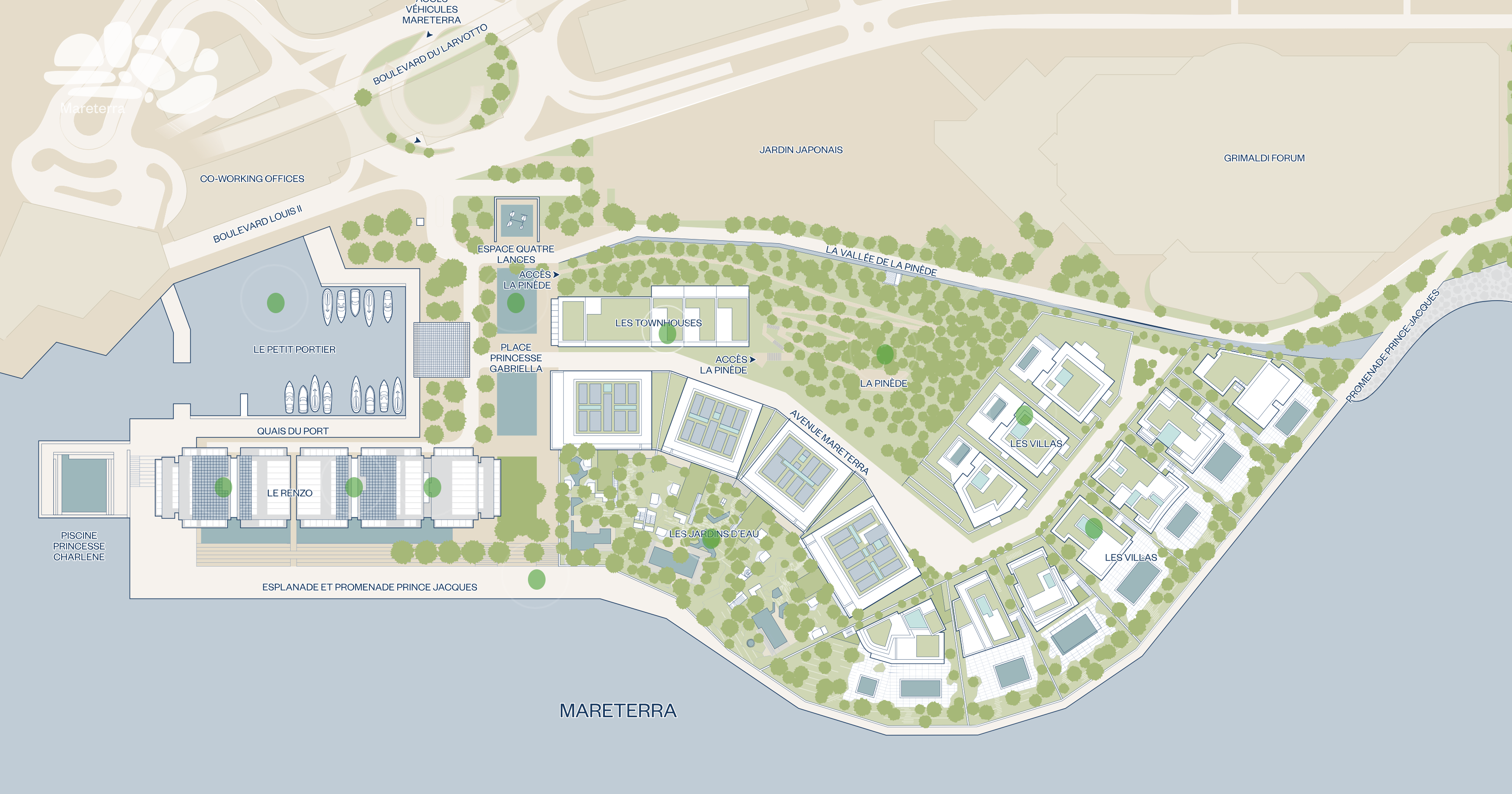
These kind of numbers will do wonders for a development pro forma. Take, for instance, Monaco's new Mareterra development. This is a 6-hectare land-reclamation project that extends into the sea and increases Monaco's total land area by something like 3%. When it opens next month, it will house new public spaces, a 500m waterfront promenade, a long list of impressive sustainability initiatives, 110 apartments, 4 townhouses, and 10 "mystery-shrouded villas" (FT's words).

I don't know off hand the cost of reclaiming land, but surely it isn't cheap. So it's remarkable to me that so few homes were able to carry the feasibility of such an ambitious project. On top of this, they've retained some of the most noteworthy architects in the world: Renzo Piano, Tadao Ando, and Norman Foster.

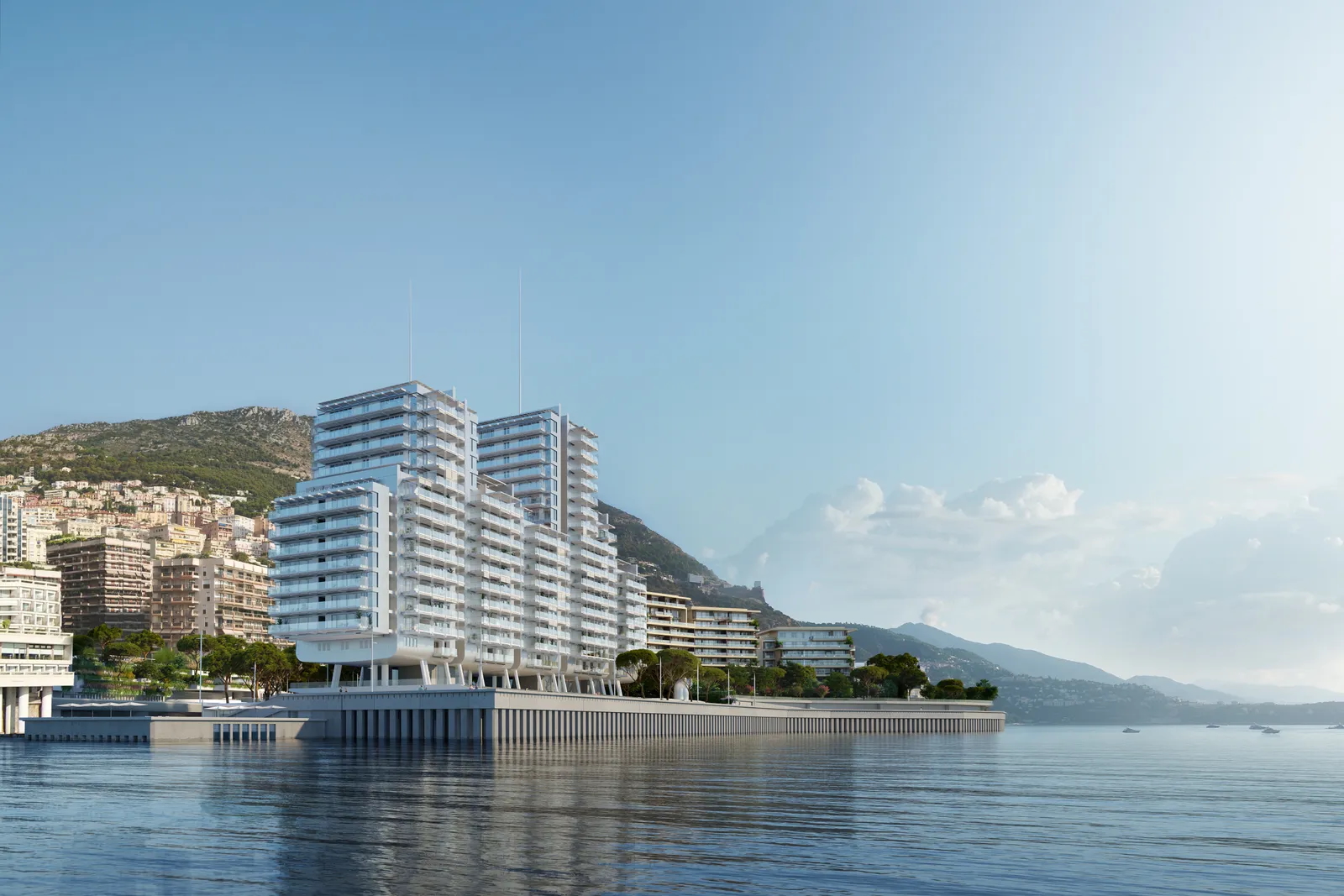
Renzo's project, called Le Renzo and pictured above, sits at the southern end of the development and houses 47 apartments. None are reportedly smaller than 400 square meters. And that's because the developers wanted to make sure that the housing would be suitable and big enough for families. Clearly it would be a lot of fun to scrutinize their development pro forma. Because many things are possible when you're underwriting what is probably the most expensive residential real estate in the world.

Images: Mareterra


Sent via Paragraph

Web3 writing & publishing

2010 El Camino Real Office 2350

Santa Clara, CA 95050

You're receiving this because you subscribed to this newsletter.

Unsubscribe or Manage Preferences

Sunday, 24 November 2024

Ten Years of Turning

This weekend marks the opening of many of the resorts in Utah, and so I've got snowboarding on the mind right now. The social media algorithms have officially switched me over from cycling videos to ski and snowboard videos. I'm ready to go. The snowboard I have been using for the last few years is from a Germany-based company called KORUA. Their story is that the company grew out of a trip to Japan. A group of friends, who were all snowboard nerds in their 30's, fell in love with the snowboa...  ‌ ‌ ‌ ‌ ‌ ‌ ‌ ‌ ‌ ‌ ‌ ‌ ‌ ‌ ‌ ‌ ‌ ‌ ‌ ‌ ‌ ‌ ‌ ‌ ‌  ‌ ‌ ‌ ‌ ‌ ‌ ‌ ‌ ‌ ‌ ‌ ‌ ‌ ‌ ‌ ‌ ‌ ‌ ‌ ‌ ‌ ‌ ‌ ‌ ‌  ‌ ‌ ‌ ‌ ‌ ‌ ‌ ‌ ‌ ‌ ‌ ‌ ‌ ‌ ‌ ‌ ‌ ‌ ‌ ‌ ‌ ‌ ‌ ‌ ‌  ‌ ‌ ‌ ‌ ‌ ‌ ‌ ‌ ‌ ‌ ‌ ‌ ‌ ‌ ‌ ‌ ‌ ‌ ‌ ‌ ‌ ‌ ‌ ‌ ‌  ‌ ‌ ‌ ‌ ‌ ‌ ‌ ‌ ‌ ‌ ‌ ‌ ‌ ‌ ‌ ‌ ‌ ‌ ‌ ‌ ‌ ‌ ‌ ‌ ‌  ‌ ‌ ‌ ‌ ‌ ‌ ‌ ‌ ‌ ‌ ‌ ‌ ‌ ‌ ‌ ‌ ‌ ‌ ‌ ‌ ‌ ‌ ‌ ‌ ‌ 

Ten Years of Turning

Brandon Donnelly

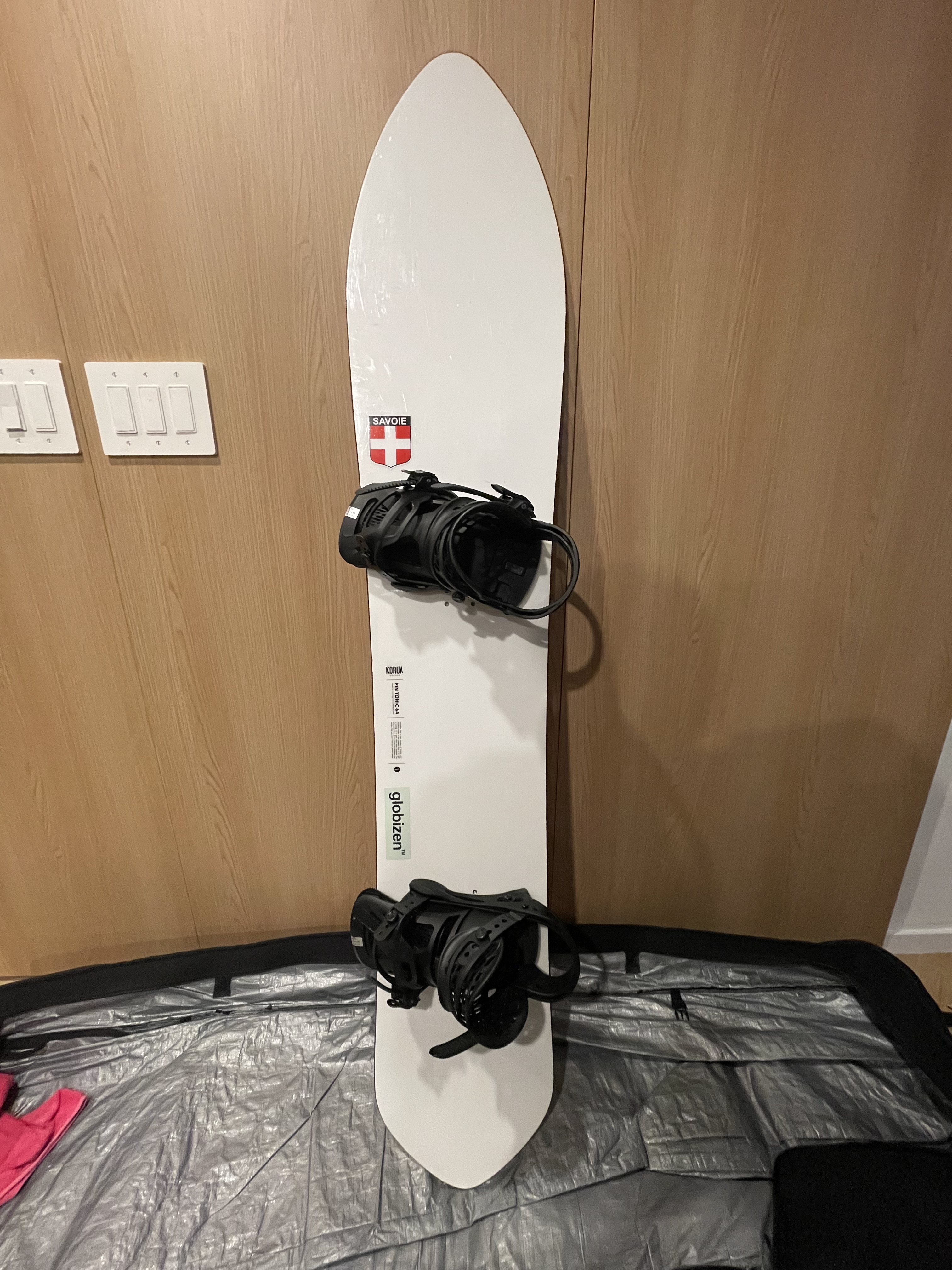
This weekend marks the opening of many of the resorts in Utah, and so I've got snowboarding on the mind right now. The social media algorithms have officially switched me over from cycling videos to ski and snowboard videos. I'm ready to go. The snowboard I have been using for the last few years is from a German company called KORUA. Their story is that the company grew out of a trip to Japan. A group of friends, who were all snowboard nerds in their 30's, fell in love with the snowboarding culture over there, specifically the focus on "deep powder boards", and so they decided to return to the Alps and create their own brand.

The result:

To date, this has been my favorite board. The shape of it fits my riding style and I love the absolute simplicity of it. None of their boards have any designs or graphics -- they're just different shapes (optimized for different kinds of riding) with an all white top and an all red bottom. I joke that it's the Christian Louboutin of snowboards. But it's not really. The KORUA brand is all about performance, the aesthetic beauty of being in the mountains, and the simple pleasure of turning a board on snow. If you've ever watched any of their videos or if you follow them on the socials, you'll know that they have a very unique aesthetic. Black and white. Super simple.

To this end, they've just released a new photo book called Ten Years of Turning. The book tells KORUA's brand story through the lens of Aaron Schwartz, who is their in-house photographer. He's been with them since the founding of the company in 2014. And even though I've only seen a few of the pages online, I follow Aaron and I already know that this is a book we're going to need to have hanging around at Parkview Mountain House. If you're into snow and beautiful things, you may want to check it out as well.


Sent via Paragraph

Web3 writing & publishing

2010 El Camino Real Office 2350

Santa Clara, CA 95050

You're receiving this because you subscribed to this newsletter.

Unsubscribe or Manage Preferences

The case for elevated rail

There is a school of thought that elevated rail is bad, or at least suboptimal, for cities. The thinking is that it's a visual blight, i...