I am currently sitting in CDG and running on somewhere between 3-4 hours of sleep. We spent the entire day in Paris on a layover and are now waiting to board for Tokyo. And so today's post is going to be two quick announcements related to Junction House. One, we just received the final architectural photos from Double Space Photography and they turned out great. If you'd like to take a look, most of them can be found here. And two, we just listed suite 607. It's a spacious two-storey and two-...
I am currently sitting in CDG and running on somewhere between 3-4 hours of sleep. We spent the entire day in Paris on a layover and are now waiting to board for Tokyo. So today's post is going to be two quick announcements related to Junction House. One, we just received the final architectural photos from Double Space Photography, and they turned out great. If you'd like to take a look, most of them can be found here. And two, we just listed suite 607. It's a spacious two-storey and two-bedroom suite, and one of the best in the building. Over the last few months, we've been seeing strong demand from end users (as opposed to investors) and I'm sure this one will go that way as well. For much of the last cycle, it was frankly easier and more profitable to just target investors. But I would argue that the opposite is true today. And that's a positive thing for the market.
After the fire at Paris' Notre-Dame in 2019 and the destruction of the cathedral's wooden spire, President Macron came forward with an idea: France would host an international design competition and look to replace the lost spire with a "contemporary architectural gesture."
This precipitated a bunch of bold and "out there" proposals, but ultimately the public wasn't down with this idea. Polls showed that the majority were in favor of just restoring the 19th century spire designed by Eugène Viollet-le-Duc. And so the idea was dropped.
This, of course, is not surprising. For better or for worse, I bet that if you asked a random sampling of people whether they prefer old-looking architecture (technical industry term) or something modern, the majority would likely say they prefer the former.
Of course, in this case, we're not just talking about any old-looking building. Notre-Dame dates back to the 12th century and is one of the country's most recognizable symbols. People are naturally going to feel strongly.
But what is perhaps more interesting is that is an instance of history repeating itself. Viollet-le-Duc's 19th century spire was obviously not Notre-Dame's original medieval spire. It had replaced a previous one that had, for whatever reason, become unstable over the course of a cool five centuries.
And interestingly enough, the idea of doing something different was also rigorously discussed in the 19th century and the answer, then, was also no:
Viollet-le-Duc himself turned down a proposal to add two new spires atop the towers, arguing that such a monument "would be remarkable but would not be Notre-Dame de Paris". Instead, he proposed to rebuild the original medieval spire and bell tower over the transept, which had been removed in 1786 because it was unstable in the wind.
Striking the right balance between preservation and progress is always a tricky one. But it's maybe comforting to know that this struggle has been going on for as long as we've been designing structures. And in the case of Notre-Dame de Paris, there's a long history to look to: just stick to the past.
I'll let all of you be the judge as to whether this was and is the right approach.
Having the right gear can make all the difference in your training, whether you're a beginner or an experienced runner.
Hi ,
Ever feel like you're missing that one thing to make your runs more enjoyable? Having the right gear can make all the difference in your training, whether you're a beginner or an experienced runner.
I've put together a list of my favorite running gear that I use and recommend to all my clients. These tried-and-true essentials can help you stay comfortable, safe, and motivated on every run.
My Top Running Gear Picks
1️⃣ The Perfect Running Shoes Brooks Running Glycerin Max Why I love it: These shoes provide excellent support, cushioning, and durability, perfect for long runs and everyday training. [👉 Shop Now with My Link]
2️⃣ Moisture-Wicking Socks Balega Hidden Comfort Why I love it: Say goodbye to blisters! These socks keep your feet dry and comfortable, even on sweaty runs. [👉 Grab Your Pair Here]
3️⃣ Hydration Handheld Bottle Amphipod Hydraform Ergo-Lite Ultra 20 oz. Handheld Water Bottle Why I love it: Staying hydrated is essential, especially on long runs. This bottle is lightweight, easy to carry, and fits just the right amount of water or electrolytes. [👉 Check It Out Here]
4️⃣ Running Watch / Fitness Tracker COROS PACE 3 Why I love it: Tracking your pace, distance, and heart rate has never been easier. It's a great tool for staying on top of your progress. [👉 Learn More Here]
5️⃣ Reflective Gear for Safety NoxGear Vest Why I love it: If you're running early mornings or evenings, reflective gear is a must for staying visible and safe. [👉 Shop Reflective Gear]
6️⃣ Foam Roller for Recovery TRIGGERPOINT Performance Therapy Grid Foam Roller Why I love it: After a tough run, this roller helps relieve tight muscles and speeds up recovery. It's a lifesaver for staying injury-free. [👉 Get One Here]
Bonus Tip:
Investing in quality gear doesn't just improve your performance—it makes running more enjoyable and keeps you coming back for more.
Which gear do you swear by? Hit reply and let me know—I'd love to hear your favorites, too!
I'm cheering you on, Steph Dunlap Certified Run Coach, Marathon Pacer, & Your #1 Cheerleader
P.S. Need help finding the best gear for your unique running style? Let's chat! I'd be happy to share personalized recommendations based on your goals and needs.
YOUR ONE-STOP HUB FOR ALL THINGS RUNNING!
Ready to crush your running goals in 2025? I've got you covered with everything you need to stay motivated and inspired! Check out these resources:
📆 2025 Race Schedule: Join me at races across the country and run your best race yet! See the schedule here!
🎓 Online Course: Learn how to start running injury-free and avoid burnout. Perfect for beginners! Explore the course here!
✍️ Blog Posts: Dive into tips, tricks, and stories to fuel your running journey. Read the blog here!
🎙️ Podcast: Tune in for expert advice, inspiring stories, and everything in between. Listen here!
📸 Instagram: Follow along for daily motivation, running tips, and behind-the-scenes moments. Follow me here!
🛍️ Shop My Faves 👟 Brooks Gear: The best running shoes and apparel! Shop Brooks here! 🛒 Amazon Finds: Must-have tools and gadgets for runners. Shop Amazon here!
Click, explore, and let's make 2025 your best running year yet! ✨
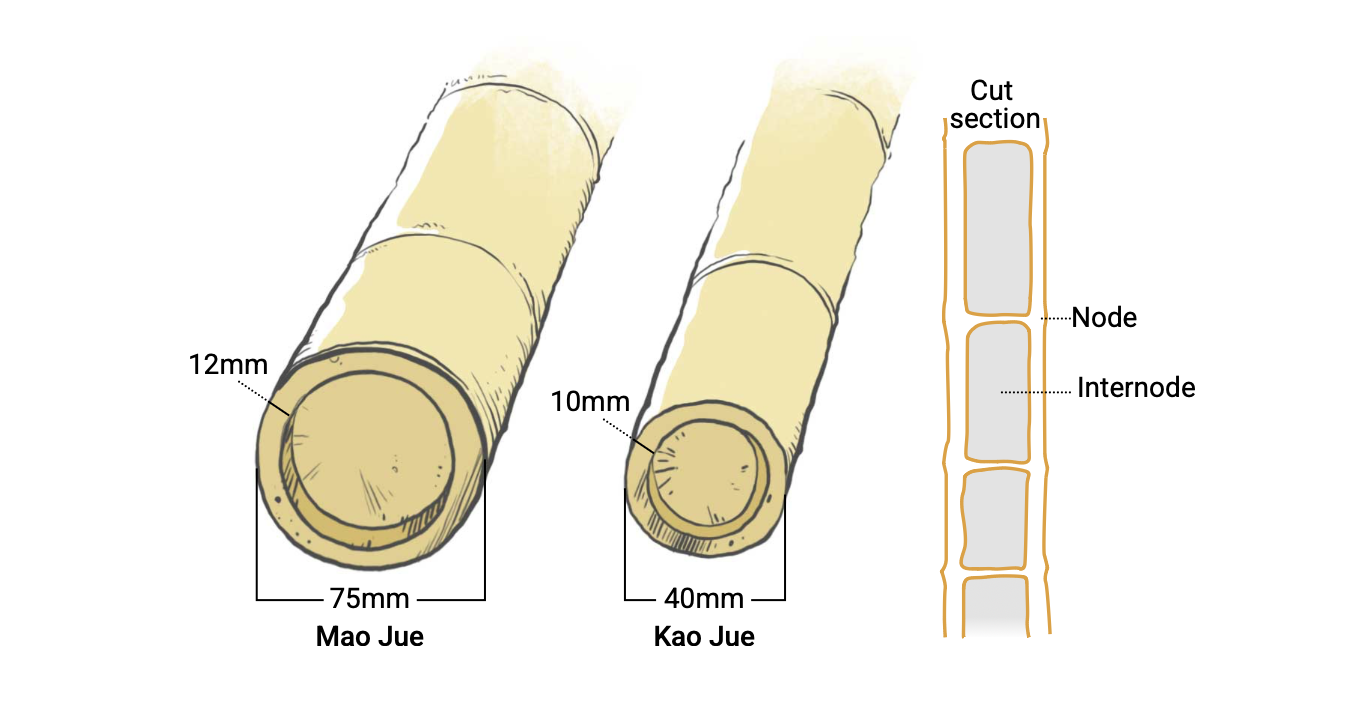
Hong Kong is one of the last cities in the world that still uses bamboo scaffolding for construction. Why? Well, for one thing, it grows very tall, and quickly (source):
Bamboo is one of the fastest-growing plants in the world, and in some cases can grow 60cm a day, and eventually 40 metres tall. Bamboo has thick underground roots called rhizomes, which can grow quickly, creating new shoots metres away.
And it's cell-like structure performs very well under compression:
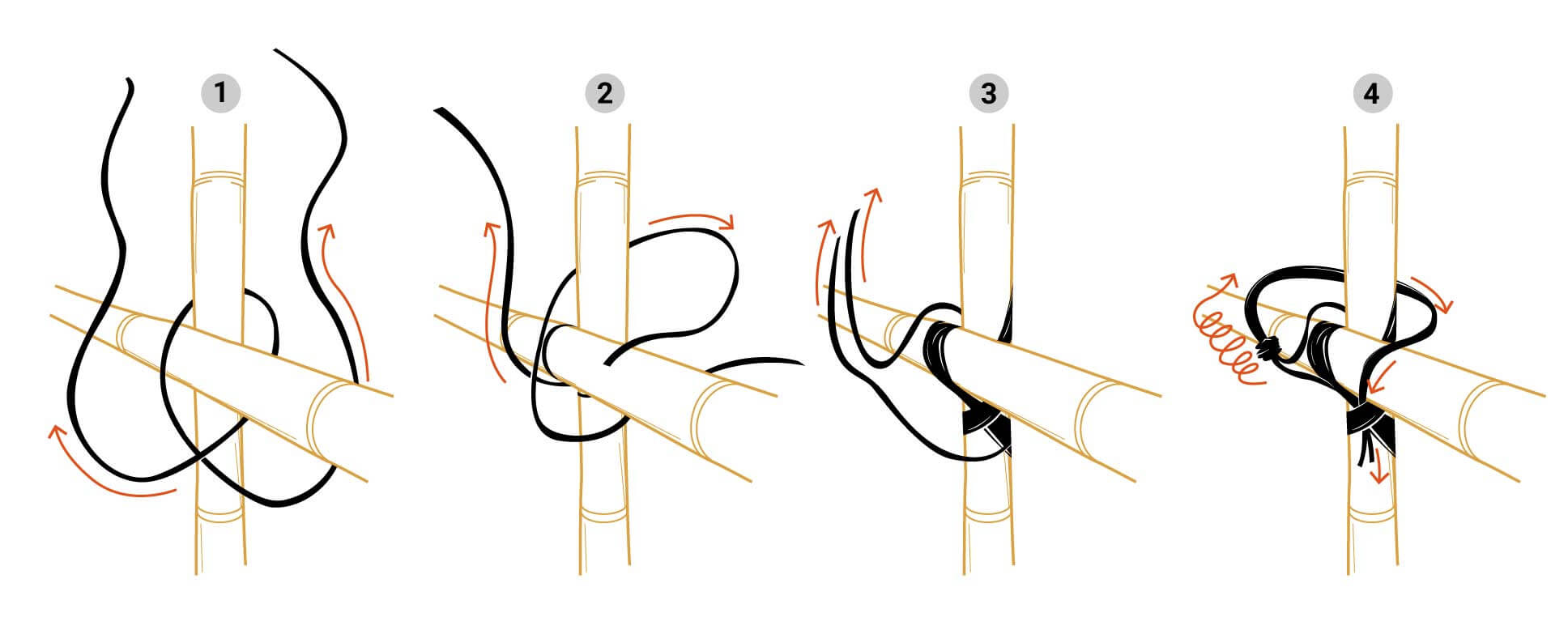
Compared to steel, bamboo is much lighter, six times faster to erect and 12 times faster to dismantle. It's also a fraction of the cost. Bamboo scaffolding doesn't require sophisticated machinery or complex tools to erect, just skilled workers with nylon ties. If properly erected, bamboo scaffolding can be stronger than steel and far more flexible. The resulting structure is also easy to modify, if necessary. Bamboo scaffolding can be used for entire structures, or part of them. In Hong Kong it is common to see "bamboo balconies" jutting from the sides of buildings where renovations are being carried out on individual units, many floors up. A bamboo pole can also be cut to fit an awkward space, which is ideal for Hong Kong, where construction spaces can be tight amid the densely packed maze of buildings.
But it's unclear how long this will remain true. Young people aren't learning the trade at the same rate as previous generations. And today, there are only 2,479 registered bamboo scaffolders left in Hong Kong. Assuming you have the nerves, the hardest part of the job is apparently the knot. It can take years to master.
If you're interested in this topic, I recommend you read this article. I found it fascinating.
Past research has shown that as cities get larger, people tend to walk faster. The probable explanation for this is that as cities get bigger, they also tend to get wealthier, and so the opportunity cost of not walking fast increases. In other words, people's time is worth more.
Of course, there's something naturally unsettling about this. But it appears to be demonstrably true. Here's another, more recent, study that compares pedestrian behavior in 1979-1980 to 2008-2010 for four urban public spaces in New York, Boston, and Philadelphia.
What the researchers did was use William Whyte's famous observational work from 1980 and then use computer vision to compare it to 2008-2010. And what they found was that, on average, walking speeds had increased by about 15% and that time spent lingering in these public spaces had basically halved across all locations.
These are pretty dramatic changes that speak to a different, or at least, evolving, urban life. Increasingly, we're all just atoms racing around and trying to get to our next engagement.
Now, part of this can likely be attributed to the greater opportunity cost thing. But another possible explanation might be the advent of the internet and smartphones. Could this be a symptom of our social lives moving away from our streets and being replaced by online platforms?
It's almost that time of year again. Later this week, marks the start of our 14th annual ski and snowboard trip. Our group missed two years because of the pandemic and so, technically, this should be the 16th annual, but who's counting? This is a trip that happens every year like clockwork and, this year, we're checking off a big mountain destination that has been on many/most of our bucket lists: Hokkaido, Japan. If you read my recent post called "The Secrets of the greatest snow on earth," ...
Later this week, marks the start of our 14th annual ski and snowboard trip. Our group missed two years because of the pandemic and so, technically, this should be the 16th annual, but who's counting? This is a trip that happens every year like clockwork and, this year, we're checking off a big mountain destination that has been on many/most of our bucket lists: Hokkaido, Japan. If you read my recent post called "The Secrets of the greatest snow on earth," you might remember that Hokkaido is one of the snowiest places on the planet. Every January, there is a 90% probability that the island will get at least 100 inches of snow!
Before Hokkaido, we're also going to be spending a handful of days in Tokyo. The first and only time I've been to Japan was back in undergrad, over 20 years ago. I'm really excited to see how the city has evolved, and to see it with fresh eyes. I was in the early days of studying architecture back then, and just starting to understand my obsession with cities. So I'm sure that I'll have a much different appreciation this time around. Neat B is also coming to experience Japan's legendary powder and she's never been to Asia before. So I'm equally excited to see Japan anew through her eyes.
This past weekend we started making our travel list. Generally, our approach is to list the things we absolutely want to see and do, including noteworthy architecture, and then let the rest happen organically. Often some of the best travel experiences are the ones you didn't plan. I also have a friend from graduate school that now runs his own practice in Tokyo: Kenta Fukunishi Architecture Office. Our group is going to lean on him to show us what's hot in contemporary Japanese architecture. My buddies and I haven't seen him since 2009.
I'm also hoping that some of you will have recommendations for Tokyo and/or Hokkaido, which is why I'm blogging about this trip a little early. Tokyo is obviously massive. It's the largest metro area in the world. And so more than most places, it demands curation. We're not even going to make a dent over the course of a few days there. If any of you have any suggestions, please leave them in the comment section below or shoot me an email at brandon dot donnelly at globizen dot com.
In terms of what you can expect here on the blog, expect photos and expect to see me measuring the width of impossibly narrow streets. I'll also be sharing a lot of content to our Globizen Instagram account, so make sure you follow us there. As always, this blog will get updated every morning -- though I'm sure I'll screw up the time zones on the way there and not know what day it is. And as always, I'll have my Fujifjilm camera on me. It's also my goal on this trip to capture more videos. It's something I love to do, but never have seem to make time for. Let's change that.