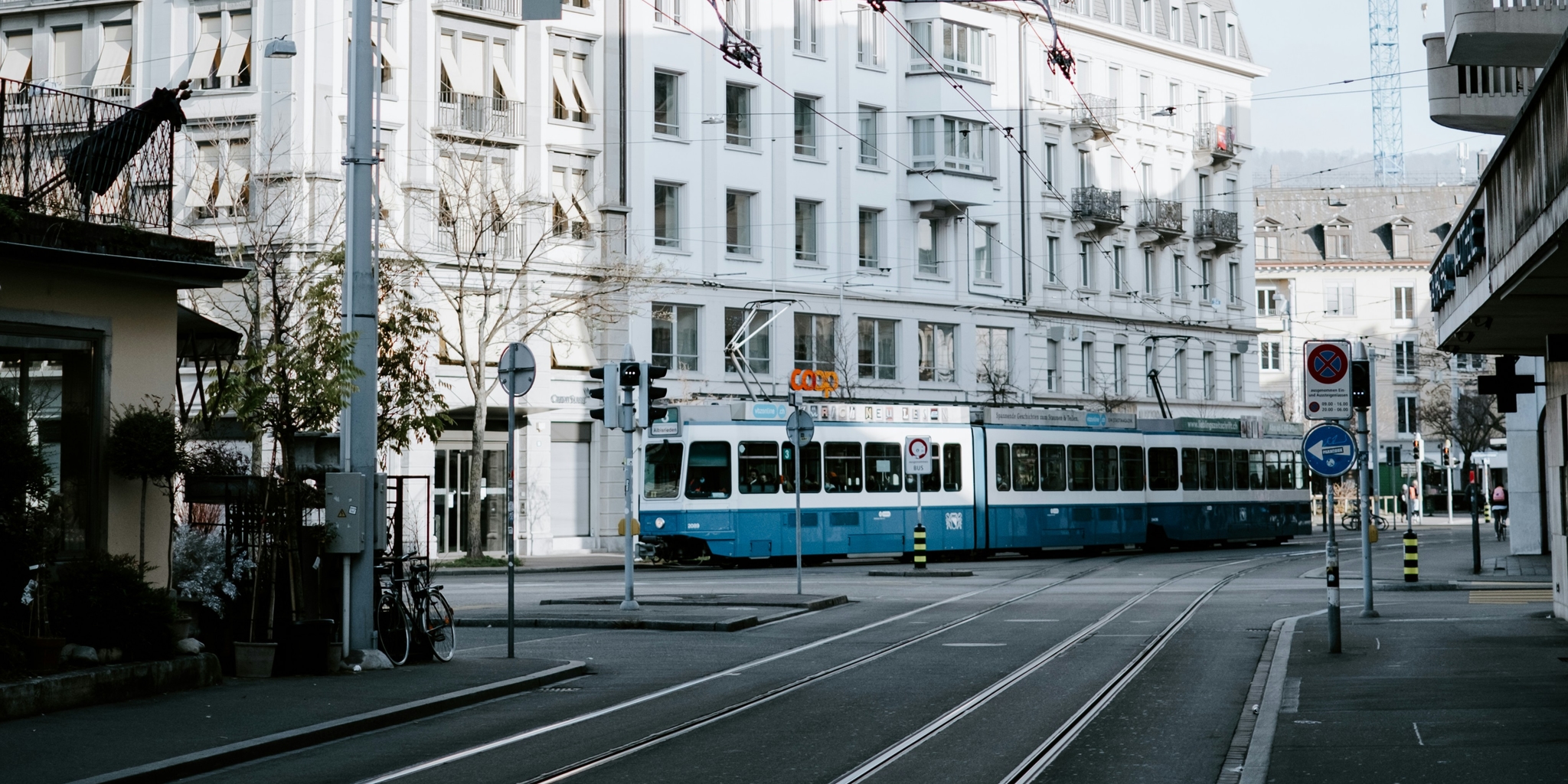
Zurich's clever (but underrated) solution to traffic congestion

April 25, 2025


 132
132 We talk a lot about mobility and traffic congestion on this blog — particularly in the context of Toronto — and that's because it remains a problem and we continue to avoid any sort of big and meaningful moves. Instead, we like to politicize the problem and find scapegoats, such as bike lanes. So I think it's important to have regular reminders that we do actually know how to address this problem. It's a choice we and other cities can make.
Here are three examples and possible solutions:
Copenhagen: Over 60% of residents use a bicycle to commute to work or school. It is one of the most bike-friendly cities in the world. You've probably heard this before and are prepared to say, "yeah, well, we're not Copenhagen." But it's important to point out that neither was Copenhagen. In the early-to-mid 70s, the modal split for bikes was somewhere between ~10-15%.
Singapore: This is one of my favorite examples. Singapore is home to the world's first congestion charge zone (1975). And it operates on a dynamic pricing model, meaning that traffic congestion is continually monitored and road prices are adjusted to ensure that traffic always flows at certain minimum speed. It's a highly effective tool and there's no shortage of global case studies. Here's Miami.
Zurich: Despite being one of the wealthiest cities in Europe, car ownership is relatively low (~40-45% of the population, compared to ~60-65% in Toronto). This is due to a great public transit system (Swiss trains and stuff) and because of strict parking policies, among other things.
Zurich has a hard cap on the number of parking spaces in the central part of the city. It is set at 1990 levels, which works out to about 7,600 total parking spaces. What this means is that if somebody, like a big bad developer, wants to build off-street parking, they need to simultaneously reduce the parking supply somewhere else. You can't exceed the cap.
This obviously discourages car usage and moderates the demand for city streets, but it also serves as a clever way to slowly replace on-street parking with better uses, such as an enhanced public realm. This policy has been in place since 1989 and it has had a dramatic effect on car usage. Between 2000 and 2021, the share of car trips in the city decreased from 40% to 29%.
I know that many of you will scoff at these solutions and think "yeah, there's no way." But this is how you make traffic better. You reduce demand and use our finite amount of road capacity more efficiently. So we can either make bold moves or we can continue to complain about traffic.
Cover photo by Claudio Schwarz on Unsplash


No comments:
Post a Comment