One of the big housing trends that we have seen across North America over the last several years is the push to allow greater supply in low-rise neighbourhoods.
Here in Toronto, this has come through a well-known program called Expanding Housing Options in Neighbourhoods (or EHON), which I believe launched around 2020. But you can find countless similar programs in other cities.
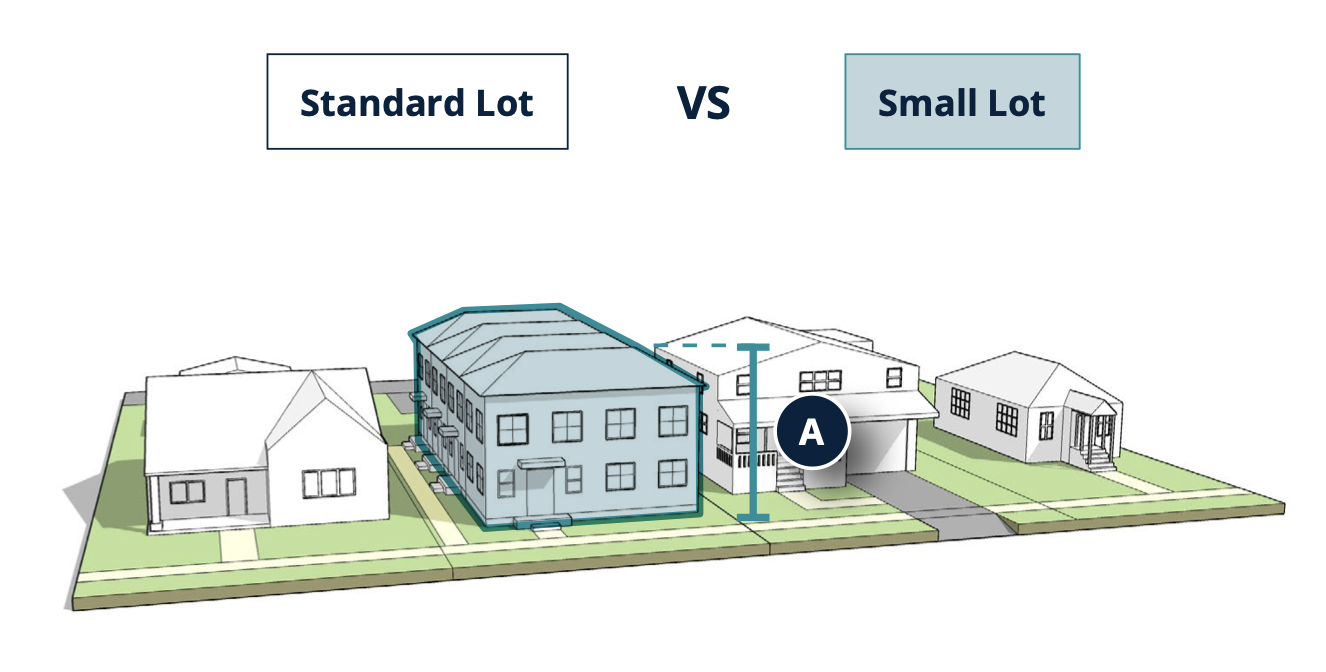
In their case, they are proposing to create a new definition for "Small Lot Dwellings," which would, among other things, reduce the minimum lot area per dwelling to 2,000 sf, reduce the number of required off-street parking spaces from 2 to 1 per dwelling, and allow up to four homes per lot via fourplexes and townhomes.
One of the things that I found interesting about their proposed policies is that they seem to explicitly encourage "sideways" multiplexes and row houses like this:
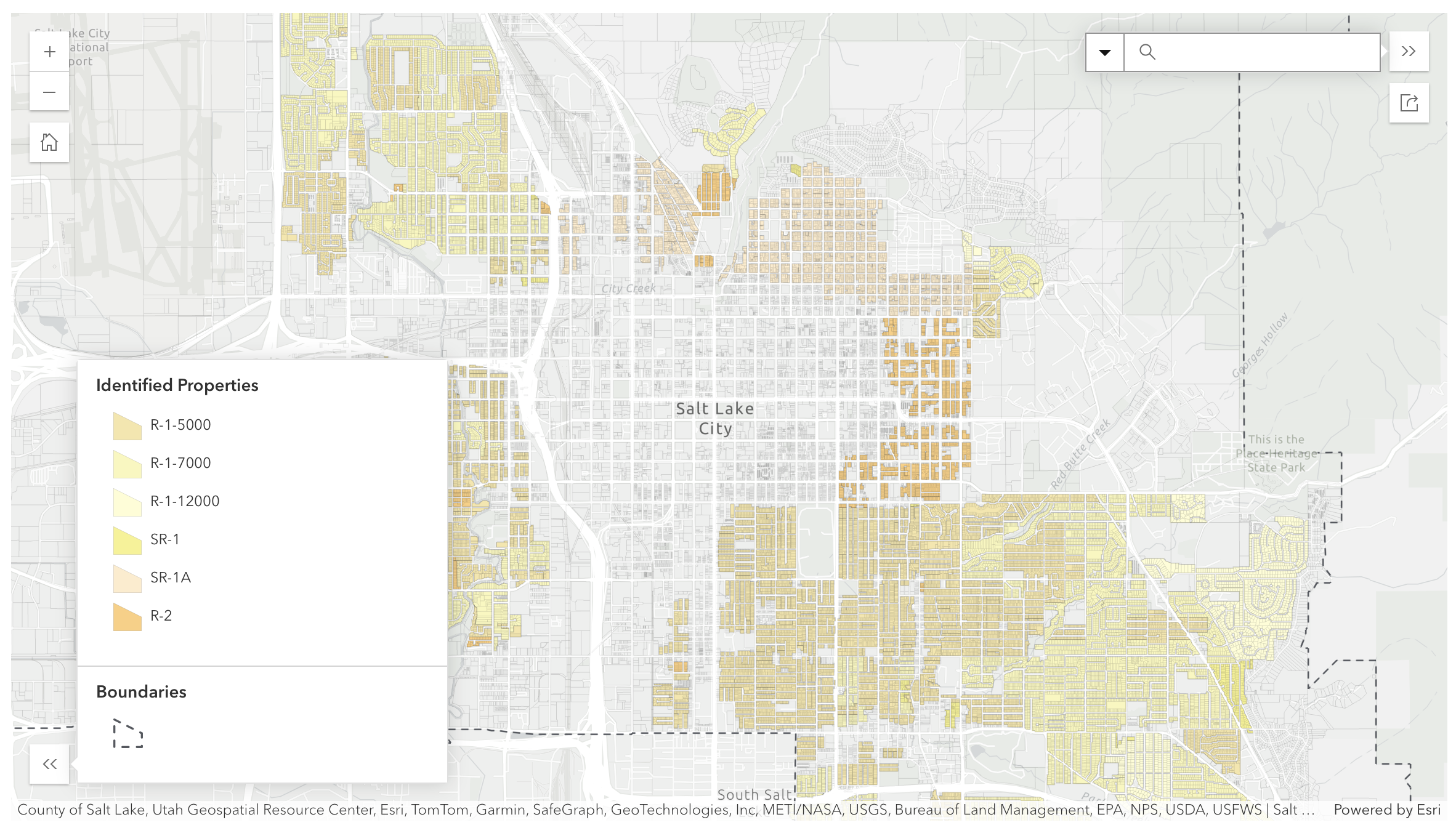
This starts to tell you something about the scale of SLC's urban fabric, even though there are no dimensions on this conceptual site plan. These are big lots.
Despite sometimes having the same moniker, cities are responding to their urban contexts in different ways. SLC uses explicit density math: at least 2,000 sf of site area per dwelling. Whereas Toronto increasingly relies on built-form standards: here's the envelope you can build, if you can fit a fourplex within it (or a sixplex in certain wards), go for it. And don't worry about parking.
If Toronto mandated one parking space per dwelling unit, virtually no multiplexes would ever get built in the city. Our lot sizes simply don't allow for it. Moving away from the car is also the only way that Toronto will be able to continue to grow and scale up.
Despite these local nuances, the overall ambition remains the same. Low-rise neighbourhoods across North America are being asked to house more people on the same amount of land, and that's a positive step forward.




No comments:
Post a Comment